Markets wanted a clear signal, but the Federal Reserve, as is its custom, offered only nuance. Recent commentary from the chairman suggests a pause in the central bank’s aggressive campaign of interest rate hikes is imminent. Wall Street interpreted the remarks with a brief, hopeful rally, sensing a long-awaited pivot back toward accommodation. For European firms operating in the United States, however, the optimism should be heavily caveated.
The chairman’s language was precise. A pause is not a reversal. He took pains to note that core inflationary pressures, while moderating, have not been vanquished. The central bank’s primary mandate, price stability, remains the top priority. This suggests a “higher for longer” scenario, where the benchmark rate may have plateaued, but will likely remain at a restrictive level for the foreseeable future.
This has direct consequences for European enterprises active in the American market. The cost of capital for expansion, acquisitions, and general operations inside the U.S. will stay elevated. The financial models that underpinned investment decisions during the previous decade of near-zero rates are now definitively obsolete. Securing funding will demand more rigorous proofs of concept and a clearer path to profitability.
The transatlantic dimension adds another layer of complexity. With the Federal Reserve holding firm, the European Central Bank faces its own distinct pressures. A persistent rate differential will influence currency markets, affecting everything from import costs for American components to the repatriated value of U.S. profits. Managing this foreign exchange risk becomes a critical corporate function, not a speculative one.
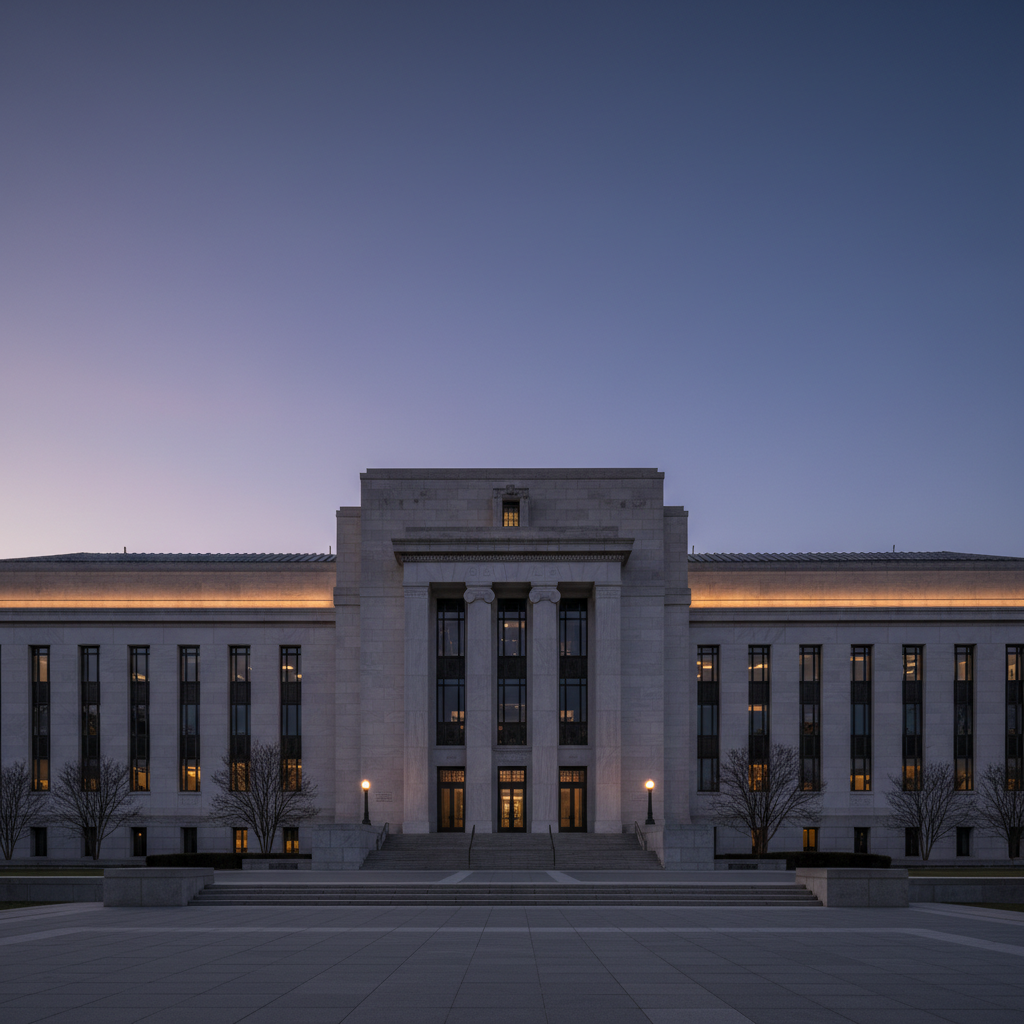
The ultimate takeaway is not about predicting the Fed’s next incremental move. It is about strategy. The signal from the Eccles Building is clear: the era of cheap American capital is not returning. Financial discipline, operational efficiency, and a sharp focus on sustainable returns are the new prerequisites for transatlantic success. The speculative froth has dissipated, leaving only the substance.
“The speculative froth has dissipated, leaving only the substance.”
Reference
Reuters — May 11, 2026