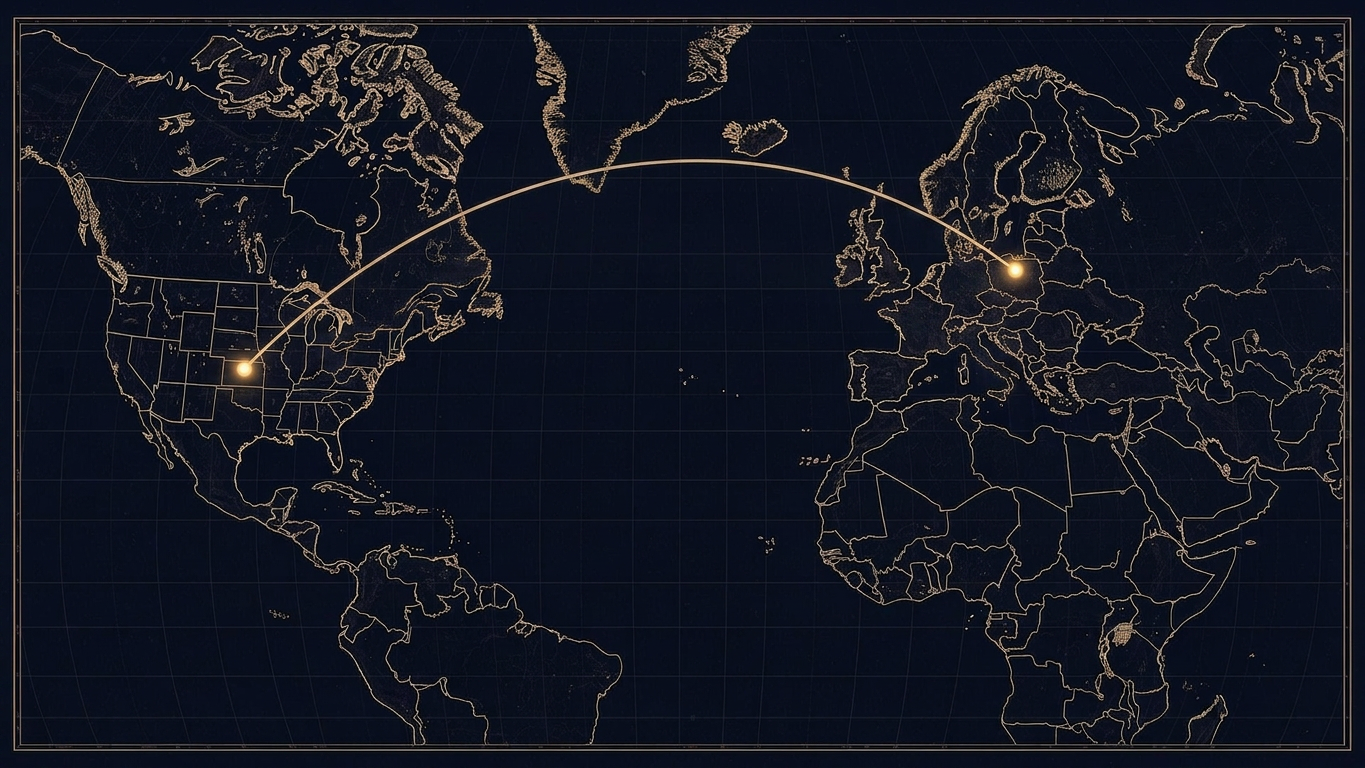
On May 1, the White House announced an increase in tariffs on European-made vehicles from 15% to 25%, citing slow EU compliance with the July 2025 Turnberry Agreement. Days later, Commission President Ursula von der Leyen pushed back: "a deal is a deal." Capitals split. Markets braced. Earnings calls quietly rewrote their second-half assumptions.
The political theater will keep moving. The operating reality will not. For the European exporter selling into the United States, the message of the past week is not that a particular tariff went up. It is that the framework underneath the price you quote your American buyer is, and will remain, unstable.
We see this every quarter in our work. A European brand wins shelf placement, signs a U.S. distributor, ships its first containers , and then a policy shift outside its control rewrites the unit economics. The companies that survive that moment are the ones that built for it. The ones that don't, treated the trade agreement as the strategy.
Three quiet adjustments separate the two groups. First, pricing architecture: a U.S. price list that can absorb a 10-point tariff swing without forcing a renegotiation. Second, sourcing optionality: a defensible answer when an American buyer asks where the product is finished, and what changes if it has to be finished somewhere else. Third, a U.S. operating posture , a real point of contact, real inventory, real follow-up , that gives the buyer a reason to stay during the noise.
None of these are tariff hedges. They are simply what it looks like to actually be in the American market, rather than exporting to it. The companies most exposed this week are not the ones with the wrong products. They are the ones who treated the U.S. as a destination instead of a presence.
“The companies most exposed this week are the ones who treated the U.S. as a destination instead of a presence.”
Referenz
Politico , May 6, 2026